

1、 Pre installation survey and scheme confirmation
Before formal construction, on-site survey is a prerequisite for ensuring the stable operation of the project and cannot be directly carried out on site. Firstly, confirm the power supply conditions. Column DC piles are mostly powered by three-phase 380V, and the transformer capacity needs to be calculated. The transformer should reserve at least 20% power margin, and the cable laying distance should be confirmed to shorten the cable length as much as possible and reduce line losses.
In terms of site, column charging piles should be selected in areas with solid and flat ground, avoiding low-lying water accumulation, fire exits, and tree covered areas. Priority should be given to planning rainproof and sunshade spaces for outdoor installation. A 0.5-1-meter heat dissipation and maintenance space should be reserved around the pile body to ensure smooth air intake and exhaust of equipment, and no debris should be piled up in the surrounding area. Simultaneously confirm the parking layout to ensure that the charging gun cable can cover the vehicle charging port normally, and reserve space for vehicle passage when deploying multiple devices.
In addition, after completing the procedures and confirming the materials, the construction personnel must hold a valid electrician qualification certificate, prepare national standard cables, galvanized anchor bolts, flame-retardant conduit, grounding materials, etc. The cable diameter should be determined according to the equipment power. Armored cables should be preferred for outdoor buried cables, and protective designs should be made.
2、 Foundation construction and pile installation and fixation
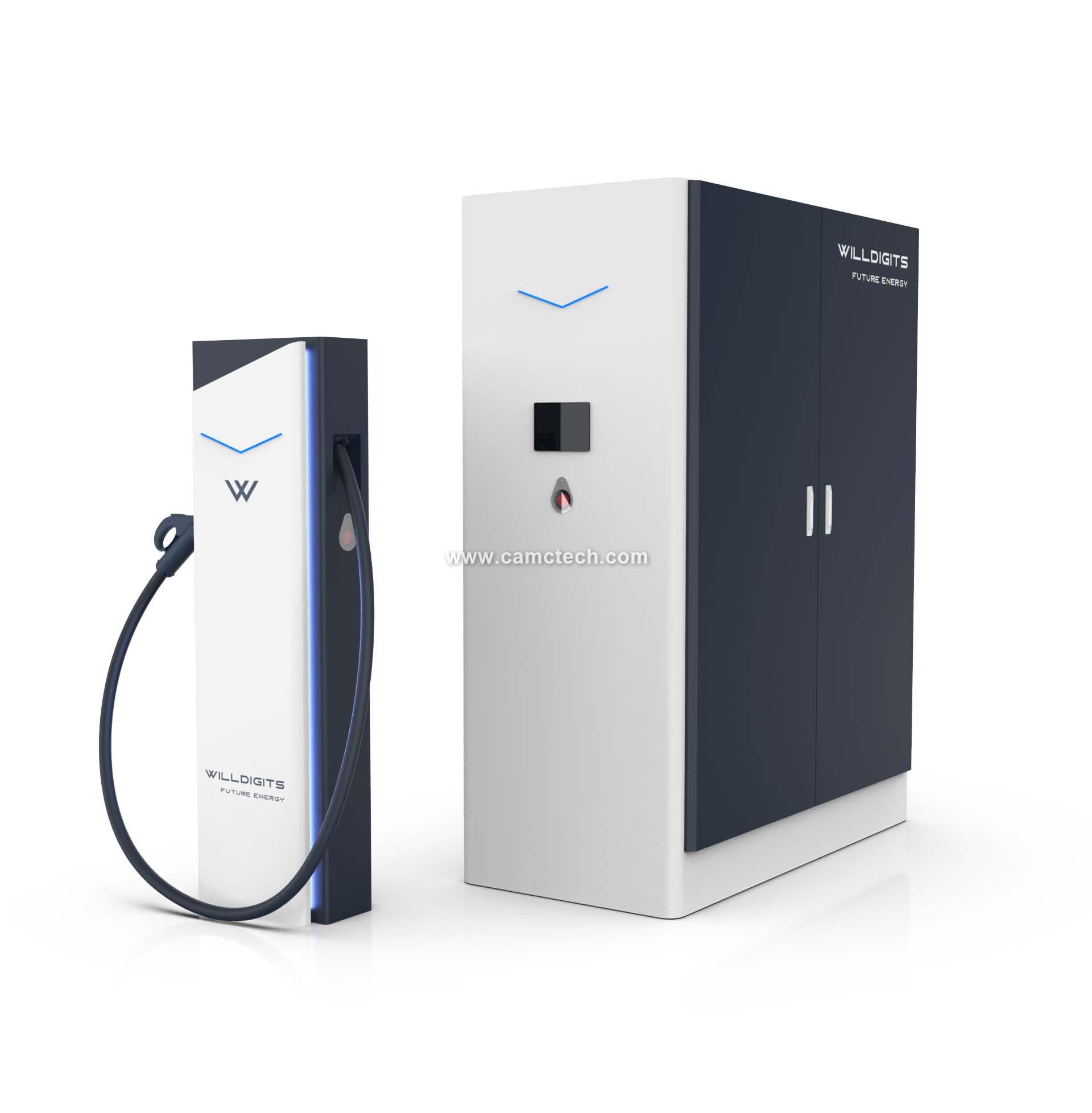
Column type DC charging piles cannot be directly placed on the ground and must have a concrete base poured to prevent settlement and tilting. Excavate the foundation pit according to the equipment drawings, pour a high-strength concrete base, with the base about 20 centimeters above the ground to avoid water immersion on the ground. Anchor bolts and cable conduits are pre embedded inside the base, and equipment installation work can only be carried out after the concrete has completely solidified.
Lift and place the column pile on the base, align it with the anchor bolt holes, calibrate the verticality with a level, evenly tighten the rust proof anchor bolts, and ensure that the pile is stable without shaking. The cable is inserted into the column through the pre embedded pipe, and a suitable length is reserved inside the column for easy maintenance and repair in the future. All cable joints should be insulated, and waterproof sealing rings should be installed at outdoor wiring locations to prevent rainwater from infiltrating and causing short circuit faults.
The electrical wiring process must strictly follow the equipment manual, distinguishing between three-phase live wire, neutral wire, and protective ground wire. The ground wire must be reliably connected to the grounding grid with a grounding resistance of less than 4 Ω. Install matching circuit breakers, leakage protectors, and lightning protection modules in the supporting distribution cabinet. All metal shells and column supports should be grounded uniformly to eliminate the risk of leakage. After wiring is completed, recheck the fastening of all terminals to avoid virtual connection and heating problems.
3、 Power on commissioning and project acceptance
After the wiring is completed, it is forbidden to directly close and energize. First, disconnect the higher-level switch, use instruments to detect the insulation of the circuit, check for potential short circuits and phase errors, and confirm that there are no errors before gradually powering on. After powering on, observe whether the charging station display screen and indicator light start normally, and check whether the device has any alarm or error messages.
Next, complete the device function debugging, configure network communication parameters, interface with the backend management system, and test whether the scanning, card swiping start stop, insulation detection, and protection functions are normal. If conditions permit, conduct a complete charging test using a real vehicle, observe the entire process of charging handshake, voltage and current output, and stopping charging, and confirm that overcurrent, overvoltage, and overheating protection can be triggered normally.
After all tests show no abnormalities, the equipment qualification certificate, construction drawings, and inspection records will be organized to complete the project acceptance. At the same time, basic operation training will be provided to the station management personnel, and the equipment manual will be retained for easy reference and maintenance in the future.
4、 Standard Operating Procedure for Column DC Charging Pile
The vehicle enters the charging parking space, shifts into P gear, tightens the handbrake, turns off the vehicle's power supply, and opens the vehicle's DC charging port cover. Visually inspect the charging gun plug for water accumulation, stains, and damaged foreign objects. Remove the charging gun, align it with the vehicle's DC interface, and insert it smoothly. If you hear the locking sound of the buckle, confirm that the charging gun is connected properly.
Identity authentication is completed through the pile touch screen, scanning code or swiping card, and the device automatically shakes hands with the vehicle BMS system for communication. After confirming the battery status, charging is started. During the charging process, real-time operation data such as charging power, charging capacity, battery temperature, etc. can be viewed on the screen or in the management background.
When the charging is completed or needs to be stopped halfway, you must first click on the stop charging button on the screen or mini program, wait for the device to cut off the high-voltage output, unlock the charging gun, and then unplug the gun head. It is strictly prohibited to directly remove the gun during the charging process. Return the charging gun to its original position, hang it neatly on the charging pile bracket, straighten out the cables, and avoid cable crushing and wear.
5、 Daily use and safety operation and maintenance precautions
During daily use, it is forbidden to knock or pry the charging pile body, and do not rinse the charging pile shell directly with water. When plugging or unplugging a charging gun in rainy or snowy weather, be careful not to let water enter the gun head, and do not start charging if the interface is damp. The operation and maintenance personnel regularly check whether the anchor bolts are loose, whether the cable sheath is damaged, and whether the grounding connection is intact.
Once the device triggers a fault alarm, immediately stop using it, cut off the power, contact the manufacturer's after-sales service for maintenance, and non professionals should not open the charging pile shell without authorization. Regularly cleaning the dust at the cooling port of the equipment can ensure the cooling effect, effectively extend the service life of the column DC charging pile, and ensure the long-term safe and stable operation of the station.